
A personalized tie bar and cufflink set combines two essential men’s formal accessories into one coordinated product. By matching the design, finish, and decorative details of both pieces, buyers can create a consistent appearance for business attire, wedding outfits, and special occasions. Adding initials, company logos, meaningful dates, or distinctive patterns makes the set more personal and suitable for gifting.
For retailers, wholesalers, corporate gift companies, and private-label brands, personalized accessories also offer opportunities to develop differentiated product collections. Working with an experienced manufacturer allows buyers to select suitable materials, customize decorative elements, and create packaging that reflects their target market. Understanding the available options is an important first step in developing a successful product.
1. What Is a Personalized Tie Bar and Cufflink Set?
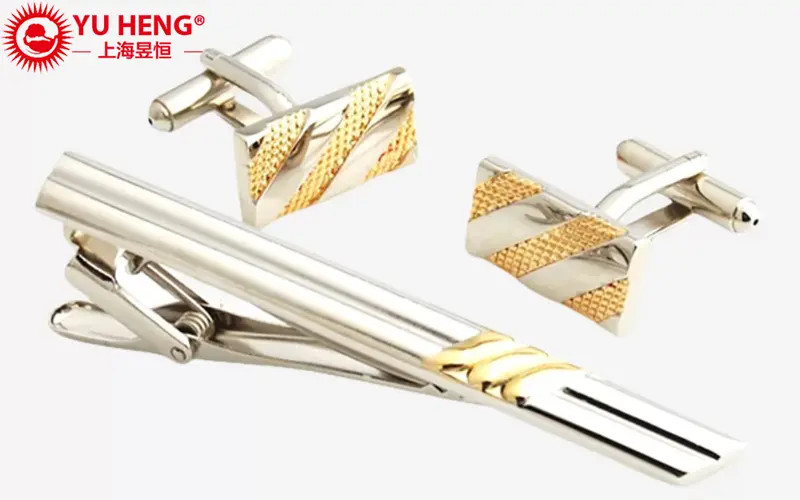
A coordinated tie bar and cufflink set typically includes one tie bar and a pair of cufflinks. The tie bar helps keep a necktie properly positioned, while cufflinks fasten shirts with French cuffs or other compatible cuff styles.
The main advantage of a matching set is visual consistency. Both accessories can share the same metal finish, decorative pattern, logo, or monogram. This creates a more coordinated appearance than purchasing individual accessories separately.
A personalized tie bar and cufflink set can be designed for individual customers or produced in larger quantities for commercial distribution. Common customization options include:
- Initials, names, and monograms
- Company logos and brand symbols
- Special dates or short engraved messages
- Different metal finishes and surface textures
- Custom shapes and decorative patterns
- Personalized gift boxes and packaging
These options allow buyers to develop products for different occasions, customer groups, and price segments.
2. Popular Design Options for Custom Tie Bar and Cufflink Sets
The design should balance appearance, functionality, and manufacturing feasibility. Since the tie bar and cufflinks have different shapes and dimensions, their decorative elements should be coordinated without necessarily being identical.
2.1 Classic and Minimalist Designs
Classic designs usually feature simple geometric shapes, clean lines, and understated metal finishes. Rectangular tie bars paired with round or square cufflinks are common combinations.
Silver-tone, gold-tone, and brushed metal finishes can create a refined appearance suitable for business meetings, formal events, and everyday office wear.
Minimalist designs are also practical for wholesale collections because they appeal to customers with different clothing styles and personal preferences.
2.2 Personalized Initials and Monograms
Initials and monograms are among the most popular customization choices. Buyers can place a person’s initials on both accessories or use a larger monogram on the cufflinks with a smaller matching detail on the tie bar.
Lettering can be engraved, embossed, or incorporated into a decorative metal design. The font should remain clear at the actual product size, particularly when the design includes multiple characters.
For gift projects, names, anniversary dates, and short messages can also be considered. Buyers should confirm all spelling and layout details before approving production.
2.3 Corporate Logo Designs
Companies can customize accessories with their logos, brand symbols, or other visual elements. These products may be used for executive gifts, employee recognition, business anniversaries, and promotional events.
Logo placement should be carefully planned to maintain readability. A complicated logo may require simplified artwork to reproduce effectively on a small metal surface.
For private-label brands, the logo can also appear on the packaging, creating a consistent presentation across the product and its gift box.
2.4 Modern and Decorative Styles
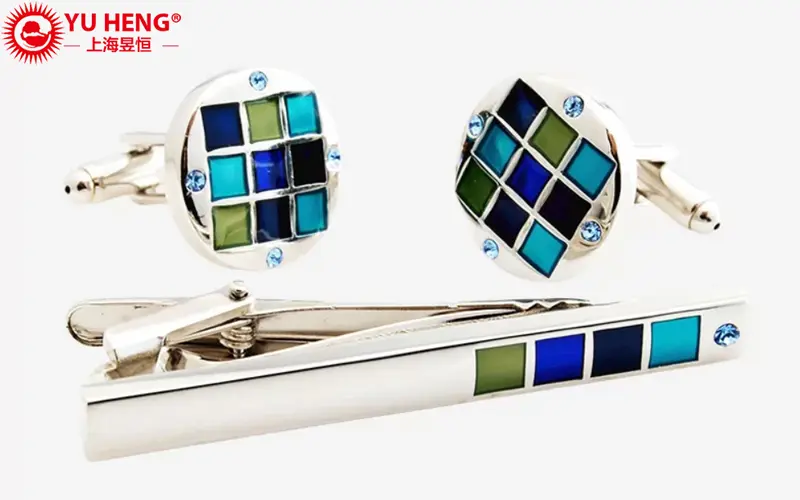
Some buyers prefer distinctive designs featuring enamel colors, textured backgrounds, geometric patterns, or raised decorative elements.
These details can help a collection stand out in the men’s accessories market. However, excessive decoration may reduce versatility. The final design should suit the intended customer group and the occasions for which the accessories will be worn.
3. Materials and Surface Finishes
Material selection influences product appearance, durability, production cost, and available manufacturing processes. Buyers should evaluate these factors before confirming a specification.
3.1 Common Materials
Several metal materials can be considered for customized accessories:
- Brass: Suitable for engraving, polishing, plating, and various decorative treatments.
- Stainless steel: Offers strength, corrosion resistance, and a clean contemporary appearance.
- Zinc alloy: Provides flexibility for producing shaped components and more complex decorative structures.
- Copper: Can be used in selected designs where its manufacturing characteristics and finish requirements are appropriate.
The best material depends on the design, target price, production quantity, and required surface treatment.
3.2 Metal Plating and Finishes
The finish of the tie bar and cufflinks should be coordinated to create a consistent appearance. Common choices include polished silver-tone, gold-tone, matte, brushed, and antique finishes.
Polished surfaces provide a bright, reflective appearance, while brushed finishes create a more restrained look. Antique treatments can emphasize recessed patterns and decorative details.
Buyers should confirm that both accessories use compatible finishes. Consistency is especially important when products are manufactured in separate production stages or ordered in multiple batches.
3.3 Enamel and Decorative Details
Enamel can introduce color into logos, initials, and other design elements. It is useful for corporate accessories, themed gift collections, and products that require distinctive brand colors.
The manufacturer should check color consistency, surface smoothness, and adhesion during production. These quality factors help ensure that the finished accessories maintain their intended appearance.
4. Applications and Market Opportunities
A custom personalized tie bar and cufflink set can serve several markets because it combines practical formalwear accessories with customization and gift value.
4.1 Wedding Accessories and Groomsmen Gifts
Matching accessories are popular for weddings because they help create a coordinated appearance among the groom, groomsmen, and other members of the wedding party.
Initials, wedding dates, and shared decorative motifs can be incorporated into the design. Buyers may also combine the set with personalized gift boxes to create a complete presentation.
Wedding planners, formalwear retailers, and gift suppliers can offer different styles to suit traditional, modern, and themed weddings.
4.2 Corporate Gifts and Business Events
Personalized accessories can be used as executive gifts, business anniversary presents, employee awards, and event souvenirs.
A company logo or employee initials can make the products more meaningful than standard promotional merchandise. For corporate orders, buyers should pay particular attention to logo accuracy, packaging consistency, and delivery schedules.
4.3 Retail and Wholesale Collections
Men’s accessory retailers and wholesalers can develop coordinated collections featuring different shapes, finishes, and personalization options.
For example, a collection may include minimalist metal designs, engraved monogram styles, and logo-based corporate products. Offering several customization levels helps businesses serve customers with different budgets and preferences.
5. How to Develop a Custom Personalized Tie Bar and Cufflink Set
A clear development process helps reduce production misunderstandings and ensures that the finished accessories meet the buyer’s requirements.
Step 1: Define the Target Market
Determine whether the products are intended for wedding gifts, corporate orders, retail sales, or private-label collections. The target market influences the design style, material selection, packaging, and expected price range.
Step 2: Prepare Design Artwork
Provide the manufacturer with reference images, logo files, initial combinations, dimensions, and preferred finishes. Vector artwork is useful for detailed logos and lettering because it can be adjusted for production more accurately.
If the design includes different elements on the tie bar and cufflinks, specify their placement separately.
Step 3: Confirm Materials and Manufacturing Methods
Discuss the base metal, plating, engraving, embossing, enamel, and other decorative processes. The manufacturer can help evaluate whether the proposed design is suitable for the selected material and production method.
Step 4: Review Samples
Sample approval is an important stage before mass production. Check the dimensions, surface finish, lettering accuracy, decorative details, and fastening performance.
Both accessories should be reviewed together to confirm that their colors and finishes match.
Step 5: Confirm Packaging and Bulk Production
Once the sample is approved, confirm the order quantity, packaging specifications, production schedule, and inspection requirements. For wholesale projects, retaining an approved sample can help maintain consistency in future orders.
6. How to Choose a Personalized Tie Bar and Cufflink Set Manufacturer
Choosing the right supplier is important for businesses that require reliable customization and repeat production. Buyers should evaluate several factors rather than comparing prices alone.
First, review the manufacturer’s experience with metal accessories and customized products. Ask whether the supplier can handle engraving, logo application, plating, enamel, and different product shapes.
Second, check its sample development and quality control procedures. A suitable supplier should be able to verify dimensions, surface appearance, fastening mechanisms, and decoration accuracy.
Third, discuss minimum order quantities, tooling costs, production lead times, and packaging options. These details help buyers calculate costs and plan inventory more effectively.
Finally, communication is essential. Provide clear specifications and request confirmation of important details before production begins. An experienced supplier should be able to explain technical limitations and recommend practical adjustments when necessary.
7. Conclusion
A personalized tie bar and cufflink set offers a practical combination of formalwear accessories and individual expression. With options such as monograms, engraved messages, corporate logos, coordinated finishes, and custom packaging, buyers can develop products for weddings, business gifts, retail collections, and other special occasions.
For wholesalers, retailers, and private-label brands, working with a capable cufflinks manufacturer helps turn design ideas into consistent products that meet market requirements. By selecting suitable materials, preparing accurate artwork, reviewing samples, and confirming production specifications, buyers can build a customized accessory collection with lasting commercial value.