
Personalised accessories can make formal clothing more distinctive while providing an opportunity to communicate a personal message, company identity or memorable date. Engravable cufflinks are a popular choice because they combine practical use with customisation. Names, initials, dates, short messages and logos can be added to the surface, turning a standard accessory into a meaningful gift or branded product.
For retailers, wholesalers and promotional merchandise businesses, these products also offer opportunities to develop exclusive collections for different customer groups. From wedding gifts and corporate accessories to private-label collections, customised engraving allows businesses to offer more design choices than standard catalogue products.
However, developing a successful product requires more than deciding what text to engrave. Buyers need to consider the cufflink shape, available engraving area, metal material, surface finish, engraving method and production quality. This guide explains the main design possibilities and manufacturing considerations when sourcing custom cufflinks.
1. What Makes Cufflinks Suitable for Engraving?
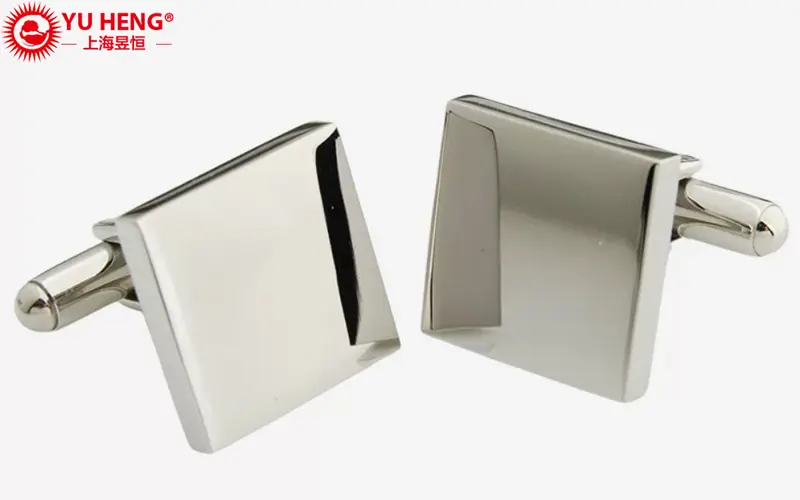
Cufflinks have a visible front surface that can be customised with text, symbols or simple graphic elements. Depending on the product structure, engraving can be applied directly to the metal surface or incorporated into a specially designed area.
The available engraving space depends on the size and shape of the cufflink face. Round, square, rectangular and oval styles are commonly used. A larger surface provides more room for text, while a compact design is often better suited to initials, small symbols or a short date.
Engraving can create a subtle, refined appearance without requiring complicated decorative elements. It is also suitable for products that need to carry consistent information, such as company names, employee initials or event dates.
For commercial orders, the engraving design should be developed with the intended audience in mind. A wedding gift may require a personal message, whereas a corporate product may need a clearly recognisable logo.
2. Popular Engraving Ideas for Different Occasions
The content engraved on a cufflink determines much of its personal or commercial value. Buyers can choose from several approaches according to the intended application.
Initials and Names
Initials are among the most straightforward customisation options. They can represent the wearer’s name, a couple’s initials or the identity of a gift recipient. Full names may also be used when the cufflink surface provides sufficient space.
Different fonts can create different visual effects. Traditional serif lettering gives a classic impression, while clean sans-serif characters are suitable for contemporary designs. Script lettering can be considered for selected gift collections, although readability should always be checked at the final engraving size.
Important Dates and Personal Messages
Dates can commemorate weddings, anniversaries, graduations and other important events. A short message or meaningful phrase can also be engraved on the front or another suitable surface, depending on the product construction.
For gift retailers, date-based designs can be offered as customisable products throughout the year. Customers can submit their own details, making each order more relevant to the recipient.
Corporate Logos and Brand Names
Businesses can use engraved cufflinks as corporate gifts, employee recognition items and promotional accessories. A company logo or brand name creates a consistent visual identity and can be combined with a suitable metal finish.
For larger orders, artwork should be approved before production. Buyers should check the logo proportions, line thickness and spacing to ensure that the engraving remains clear on the selected surface.
Symbols and Custom Graphics
Simple icons, family symbols, geometric patterns and other small graphics can add character to a design. These elements may be combined with initials or dates, provided the layout does not become overcrowded.
3. Choosing the Right Shape and Surface Area
The cufflink shape influences both the overall appearance and the engraving layout. It should therefore be selected before finalising the artwork.
Round cufflinks offer a classic shape and work well with initials, short names and circular logos. The central area can be used for the main engraving, with additional text arranged around it when dimensions permit.
Square cufflinks provide a structured layout that is suitable for letters, symbols and compact company logos. Their straight edges can make alignment easier during artwork preparation.
Rectangular cufflinks offer a wider area for horizontal text, longer names and certain logo designs. They can be useful when the engraving contains more than one line.
Oval cufflinks create a softer appearance and can accommodate initials or decorative lettering. The layout should follow the available curved surface to maintain visual balance.
Custom shapes may also be developed for specific projects. However, unusual outlines should be evaluated in terms of production complexity, engraving space and manufacturing cost.
4. Materials and Surface Finishes for Custom Cufflinks
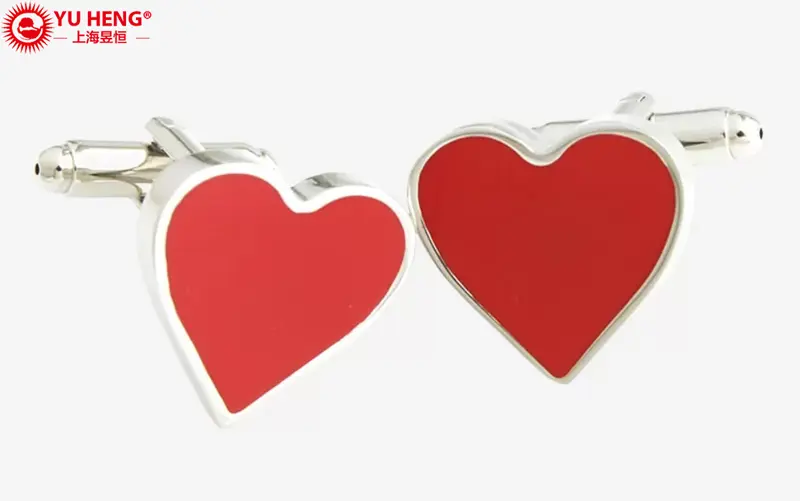
Material selection affects the weight, appearance, durability and production cost of cufflinks. Common materials used in metal cufflink manufacturing include brass, stainless steel, zinc alloy, iron and aluminium sheet.
Brass is suitable for many decorative metal products and supports different surface treatments. Stainless steel is often selected for its modern appearance and sturdy construction. Zinc alloy can be used for designs that require particular shapes or moulded details. Iron and aluminium sheet may also be considered for specific product structures.
Surface finishing is another important decision. Options may include polished effects, plated colours and other decorative treatments. The selected finish should complement the engraving and remain consistent across the product.
Buyers should also consider the contrast between the engraved area and the surrounding surface. Depending on the engraving technique and finish, the engraved details may appear darker, brighter or more pronounced than the background.
Before approving mass production, it is advisable to review a sample. This allows buyers to evaluate the actual appearance of the engraving, the surface finish and the overall product construction.
5. Common Engraving Methods Used in Cufflink Production
Different engraving methods can produce different results. The most suitable process depends on the base material, artwork complexity, production quantity and required appearance.
Laser Engraving
Laser engraving uses a focused laser to mark the surface according to a digital design. It is suitable for names, initials, dates, small logos and detailed patterns. The process can provide consistent positioning, which is valuable for personalised orders and repeat production.
Mechanical Engraving
Mechanical engraving uses a cutting tool to create marks on the material. It may be considered for certain designs that require a defined engraved line or a particular surface effect. The suitability depends on the product structure and material.
Die-Cast or Moulded Details
For some designs, raised or recessed features can be incorporated during the production of the metal component. This is different from engraving text onto an already finished surface, but it can be useful when developing custom logos or decorative patterns.
The manufacturing team should recommend the appropriate method after reviewing the artwork and product specifications. Buyers should not assume that every font, line thickness or graphic can be reproduced equally well using every process.
6. How to Prepare Artwork for Engraving
Artwork preparation has a direct influence on the final appearance. A design that looks clear on a computer screen may become difficult to read when reduced to a small cufflink surface.
Start by providing clear text, high-quality logo files or vector artwork whenever possible. Vector files are especially useful for scaling and maintaining clean outlines. If the design contains multiple elements, identify which details are essential and which can be simplified.
Font size and line thickness should be checked against the actual product dimensions. Very small letters, narrow gaps and complicated illustrations may not reproduce clearly. Buyers should also confirm spelling, capitalisation, punctuation and date formats before approving the design.
A digital proof is an important part of this process. It should show the engraving position, approximate size and relationship between the artwork and cufflink face. For commercial orders, written approval of the final artwork can help prevent avoidable production errors.
7. What to Expect from an Engravable Cufflinks Manufacturer
When sourcing from an engravable cufflinks manufacturer, buyers should evaluate the supplier’s ability to manage the complete customisation process.
First, check whether the manufacturer can support different product shapes, materials and finishes. A supplier with flexible production capabilities may be better suited to projects involving several designs or product variations.
Second, ask about sample development. A physical sample allows buyers to check the engraving depth or appearance, text readability, surface quality and fastening mechanism before confirming a larger order.
Third, understand the quality control process. The manufacturer should inspect engraving accuracy, spelling, positioning, surface scratches and assembly quality. For wholesale orders, consistency across the production batch is particularly important.
Finally, discuss minimum order quantities, production schedules, packaging and shipping arrangements. A clear quotation should identify the product specifications and any additional costs related to custom artwork, sampling or special packaging.
8. Opportunities for Wholesale and Private-Label Businesses
Custom engraved cufflinks can serve several commercial markets. Gift retailers can offer personalised products for weddings, anniversaries and formal occasions. Corporate gift suppliers can develop accessories featuring company logos or employee names. Promotional merchandise distributors can use them for exhibitions, business events and brand campaigns.
Private-label brands may also develop collections with different shapes, metal finishes and engraving styles. OEM and ODM services allow buyers to provide their own designs or work with the manufacturer to develop new product concepts.
Shanghai Yuheng is a professional custom cufflinks manufacturer, supporting customers with customised metal cufflink designs and production requirements for different markets.
For buyers planning repeat orders, it is useful to retain approved samples, artwork files and detailed product specifications. This helps maintain consistency when the same design needs to be manufactured again.
9. Start Your Custom Cufflink Project
A successful engraving project begins with a clear design and realistic product specifications. Buyers should decide what information needs to appear on the cufflinks, choose an appropriate shape and confirm the required material and finish.
Before placing a bulk order, provide the manufacturer with the artwork, estimated quantity and packaging requirements. Review the digital proof carefully and request a physical sample when necessary. These steps help ensure that the final product meets expectations in terms of appearance, workmanship and usability.
Whether you are developing personalised gifts, corporate accessories or a private-label collection, thoughtful engraving can make a simple pair of cufflinks more distinctive. By working with an experienced manufacturer and confirming every detail before production, businesses can create products that suit their customers and support long-term commercial opportunities.