
Custom made cufflinks give businesses and buyers the flexibility to create men’s accessories around a specific design, brand identity, event, or customer requirement. Instead of selecting only from standard catalog products, buyers can develop cufflinks with custom shapes, dimensions, logos, patterns, engraving, finishes, packaging, and other details.
For retailers, wholesalers, wedding suppliers, corporate gift companies, fashion businesses, and private-label sellers, custom production can provide greater control over the final product. A carefully developed cufflink can become a distinctive retail item, a meaningful gift, or part of a larger men’s accessories collection.
However, creating a successful customized product requires more than providing a logo and requesting a quotation. The design must be suitable for manufacturing, the materials need to match the intended application, and every production detail should be confirmed before mass production begins.
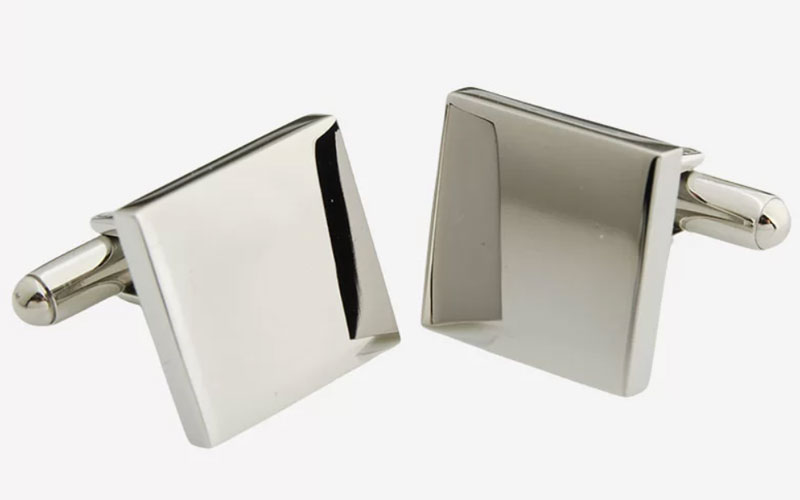
What Makes Custom Made Cufflinks Different?
Standard cufflinks are usually produced according to fixed designs, dimensions, and finishes. Customers select an existing product and may have limited opportunities to change its appearance.
Custom made cufflinks work differently. The buyer can participate in the product development process from the beginning.
Customization may include:
- Product shape
- Dimensions
- Thickness
- Surface finish
- Engraving
- Logo placement
- Decorative patterns
- Enamel details
- Fastening mechanism
- Packaging
- Private-label elements
This flexibility allows buyers to create products for specific target markets instead of relying entirely on general-purpose designs.
For example, a fashion retailer may need a distinctive geometric cufflink collection, while a corporate buyer may want a logo-based design. A wedding supplier may require personalized initials and dates. These projects all use the same basic product category but require different manufacturing solutions.
Starting with the Product Concept
The first stage of a custom cufflink project is defining the product concept.
Buyers should consider who will use the cufflinks, where they will be sold, and what type of visual identity they should communicate.
Important questions include:
- Who is the target customer?
- Is the product intended for retail or gifting?
- What style should the cufflinks have?
- What dimensions are appropriate?
- Is personalization required?
- What quantity is needed?
- Will the product need customized packaging?
A clear product concept helps the manufacturer determine which production methods and materials are suitable.
It also reduces unnecessary revisions later in the development process.
Custom Shapes and Dimensions
One of the biggest advantages of working with a custom made cufflinks manufacturer is the ability to create shapes that are not available in a standard catalog.
Traditional geometric shapes can be adapted, or completely new silhouettes can be developed.
Possible designs include:
- Round cufflinks
- Square cufflinks
- Rectangular cufflinks
- Oval cufflinks
- Bar designs
- Geometric shapes
- Letter-shaped designs
- Logo-shaped cufflinks
- Abstract designs
Dimensions can also be adjusted according to the target market.
A larger surface can provide more space for logos or decorative elements, while a smaller design may be more appropriate for customers who prefer understated accessories.
The thickness also influences the overall appearance and weight of the finished product. These specifications should therefore be confirmed during the engineering stage.
Material Selection for Custom Production
Material selection should be based on the product’s intended use, appearance, manufacturing requirements, and target price.
Common materials for men’s cufflinks include brass and stainless steel, along with other suitable metal constructions depending on the project.
Different materials can affect:
- Product weight
- Machining characteristics
- Forming methods
- Engraving performance
- Surface finishing
- Durability
- Production cost
A manufacturer can help buyers compare suitable material options based on the final design.
For example, a product with intricate details may require a different manufacturing approach from a simple flat cufflink with a large engraved surface.
The material decision should therefore be made together with the product design rather than separately.
Logo and Artwork Customization
Many businesses choose custom cufflinks because they want to incorporate their own visual identity.
A company logo can be engraved, embossed, cast, or incorporated into the structure of the cufflink. Fashion businesses may provide original artwork, while gift suppliers may use initials, symbols, or decorative patterns.
Before production, artwork needs to be reviewed carefully.
Very thin lines, tiny details, or complicated patterns may not reproduce clearly at a small product size. A manufacturer can adjust the artwork while preserving the main visual characteristics.
Vector files are generally useful for custom manufacturing because they can be scaled and modified accurately.
Engraving Options
Engraving is one of the most practical ways to personalize custom cufflinks.
It can be used for:
- Names
- Initials
- Dates
- Company logos
- Short messages
- Signatures
- Symbols
- Product numbers
Laser engraving is suitable for many detailed designs and allows precise positioning. Mechanical engraving can also be considered depending on the material and desired effect.
The engraving method should be selected according to the artwork, surface finish, material, and production requirements.
For large orders, the cufflinks manufacturer should also establish consistent engraving parameters so that the appearance remains uniform throughout the batch.
Surface Finishes
The same cufflink shape can have a completely different appearance depending on its surface finish.
Common finishing options include:
- Polished
- Matte
- Brushed
- Textured
- Antique-style
- Contrasting finishes
A polished surface can create a clean and formal appearance, while a matte or brushed surface may provide a more contemporary look.
Manufacturers can also combine different finishes within one design. For example, the main body can have a brushed surface while the logo area has a smoother finish.
The selected finish should be evaluated together with the engraving because surface texture can influence the visibility of small details.
Developing a Prototype
A prototype is one of the most important stages of custom manufacturing.
Digital drawings can show dimensions and design concepts, but a physical sample allows the buyer to evaluate the actual product.
The sample can be checked for:
- Size
- Weight
- Shape
- Thickness
- Logo placement
- Engraving clarity
- Surface finish
- Fastening mechanism
- Overall appearance
If adjustments are necessary, they can be made before mass production.
For complicated projects, several sample revisions may be required. Although this can extend the development stage, it can significantly reduce the risk of large-scale production problems.
Manufacturing Process
Once the design and sample are approved, production can begin.
The exact process depends on the product structure, but customized cufflinks may involve several stages.
Forming the Main Components
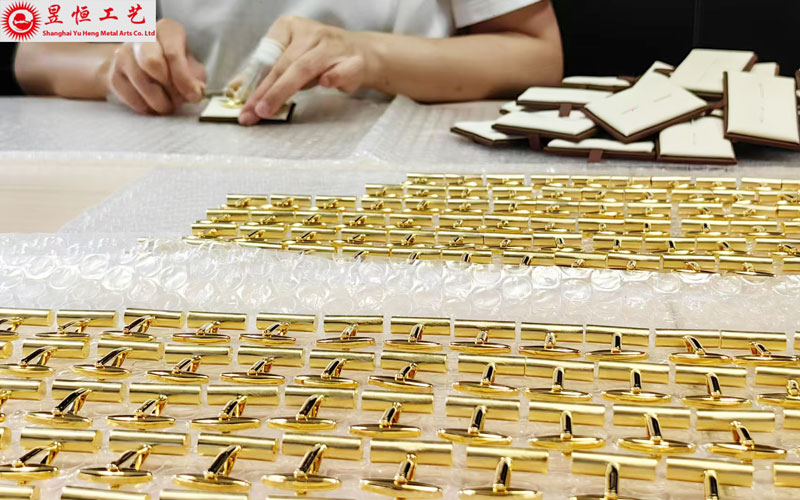
Depending on the design, components may be stamped, cast, machined, cut, or formed using another suitable process.
The production method should match the design complexity and order quantity.
Surface Preparation
After forming, components may require grinding, polishing, brushing, or other preparation.
A properly prepared surface provides a more consistent base for subsequent finishing and personalization.
Applying the Custom Details
The logo, engraving, enamel, pattern, or other decorative elements are then added according to the approved specification.
Assembly
The decorative component is assembled with the cufflink backing and fastening mechanism.
Alignment is checked to ensure that the final product functions correctly.
Inspection
Finished products are inspected before packaging and shipment.
Quality Control for Custom Made Cufflinks
Quality control is particularly important for customized products because buyers are paying for specific details rather than a generic product.
A quality inspection may include:
- Product dimensions
- Shape consistency
- Surface condition
- Engraving accuracy
- Logo placement
- Color consistency
- Assembly quality
- Fastening mechanism
- Packaging
- Quantity
For personalized products, text accuracy is also essential. Names, initials, dates, and other customer-provided information need to be checked carefully.
A clear approved sample can serve as an important reference throughout production.
Custom Made Cufflinks for Different Markets
The flexibility of custom manufacturing makes cufflinks suitable for a wide range of commercial applications.
Fashion Accessories
Fashion businesses can develop exclusive designs that match their collection and target customer.
Corporate Gifts
Companies can incorporate logos, anniversary dates, or other corporate elements into cufflinks used for employee and client gifts.
Wedding Accessories
Custom cufflinks can feature initials, dates, wedding symbols, or coordinated designs for grooms, best men, and groomsmen.
Promotional Products
Organizations can create logo-based cufflinks for events, campaigns, or special occasions.
Private-Label Collections
Retailers can develop their own designs and packaging instead of selling generic products.
This range of applications allows one manufacturing capability to support multiple sales channels.
Ordering Custom Cufflinks in Bulk
B2B buyers should prepare complete specifications before requesting a production quotation.
The information should ideally include:
- Quantity
- Product dimensions
- Material
- Design artwork
- Engraving requirements
- Surface finish
- Fastening mechanism
- Packaging
- Sample requirements
- Delivery schedule
If several designs are included in the same order, each version should be clearly identified.
For example, a buyer may require 500 pieces in one shape with three different logo variations. The manufacturer needs accurate artwork and quantities for each variation to organize production correctly.
Packaging and Private Label
Packaging can be developed together with the cufflinks.
Options may include individual boxes, gift boxes, sleeves, pouches, inserts, and customized retail packaging.
Private-label buyers can also request their own logo, product information, labels, or other packaging elements.
For retailers, professional packaging can help differentiate a product from standard accessories and create a more complete customer experience.
Packaging should be confirmed early because the box dimensions and internal inserts depend on the final cufflink dimensions.
How to Choose a Custom Made Cufflinks Manufacturer
Selecting the right manufacturing partner is important because custom projects require more communication than standard product orders.
A suitable manufacturer should be able to support:
- Product design development
- Material selection
- Artwork preparation
- Prototyping
- Custom tooling
- Engraving
- Surface finishing
- Assembly
- Quality inspection
- Packaging
- Bulk production
Buyers should also ask about minimum order quantities, sample procedures, production lead times, and repeat-order capabilities.
For long-term business relationships, consistent production is particularly valuable. Once a successful product has been developed, future orders should be able to follow the same approved specifications.
Reducing Problems During Custom Production
Many production issues can be prevented through clear communication before manufacturing starts.
Buyers should provide accurate artwork and confirm dimensions, material, finish, engraving position, packaging, and quantities.
The manufacturer should then provide a clear specification or sample for approval.
It is better to resolve design questions before mass production than to make changes after hundreds or thousands of pieces have already been produced.
A documented approval process can therefore help both sides manage expectations and maintain product consistency.
Why Custom Manufacturing Can Add Long-Term Value
The value of custom cufflinks is not limited to the first production order.
Once a successful design has been developed, it can become part of a retailer’s permanent collection, a company’s corporate gift program, or a brand’s men’s accessory range.
The same basic structure can sometimes be adapted into additional variations through different engraving, finishes, colors, or packaging.
This creates opportunities to build a product family rather than relying on one isolated design.
For B2B buyers, this flexibility can make custom production a useful long-term product development strategy.
Conclusion
Custom made cufflinks provide businesses with greater control over product design, personalization, materials, finishes, packaging, and overall presentation. They can be developed for fashion collections, wedding accessories, corporate gifts, promotional products, wholesale catalogs, and private-label businesses.
The most successful projects usually begin with a clear product concept and continue through detailed artwork preparation, material selection, prototype development, production approval, quality control, and packaging.
For buyers, choosing an experienced custom made cufflinks manufacturer can make the process more efficient and reduce production risks. A capable manufacturing partner should be able to turn an idea or artwork into a practical product while maintaining consistent quality across bulk orders.
Whether the requirement is a simple engraved design or a completely new cufflink concept, careful planning and close communication can help create a finished accessory that matches both the buyer’s specifications and the expectations of the final customer.