
The global market for stainless steel cufflinks continues to expand in 2026, driven by growing demand in corporate gifting, fashion accessories, promotional branding, and personalized retail products. Stainless steel cufflinks are no longer considered a niche accessory. They have become a mainstream product category with stable demand across multiple industries.
For wholesalers, distributors, and private-label brands, choosing the right manufacturing partner is essential. The quality of the supplier directly affects product durability, brand reputation, and long-term profitability. This article provides a comprehensive guide on how to identify and evaluate the best wholesale suppliers for stainless steel cufflinks 2026, including production standards, customization capabilities, pricing structures, and sourcing strategies.
1. Global Demand Trends for Stainless Steel Cufflinks in 2026
The demand for stainless steel cufflinks has evolved significantly in recent years. Several macro trends are shaping the market in 2026.
1.1 Corporate branding expansion
Companies are increasingly investing in branded accessories for:
- Employee uniforms and formal wear
- Corporate gifting programs
- Business events and conferences
- Client appreciation packages
Stainless steel cufflinks provide a durable and professional appearance, making them ideal for corporate identity reinforcement.
1.2 Growth in personalized fashion
Consumers now prefer products that reflect individuality. This has led to rising demand for:
- Custom initials engraving
- Symbolic designs
- Limited-edition collections
- Event-based commemorative cufflinks
1.3 Rise of minimalist fashion
Modern fashion trends favor simple and clean designs. Stainless steel naturally fits this aesthetic due to its:
- Neutral metallic appearance
- Smooth finishing options
- Compatibility with matte and brushed textures
1.4 Expansion of online retail channels
Although this article avoids referencing specific platforms, it is important to note that digital commerce has significantly expanded global accessibility for cufflink buyers and sellers, increasing competition among cufflinks manufacturers.
2. Characteristics of a High-Quality Wholesale Supplier
To identify the best wholesale suppliers for stainless steel cufflinks 2026, buyers must evaluate suppliers beyond surface-level pricing. True value lies in consistency, production capability, and customization flexibility.
2.1 Manufacturing stability
A reliable supplier should demonstrate:
- Continuous production capacity throughout the year
- Scalable output for seasonal demand fluctuations
- Stable workforce and production management
- Minimal defect rates across batches
2.2 Technical manufacturing capability
High-quality cufflinks require precision manufacturing methods such as:
- CNC precision machining
- High-pressure die casting
- Fine engraving systems
- Advanced polishing equipment
These technologies ensure accuracy, symmetry, and surface refinement.
2.3 Quality assurance systems
Professional suppliers implement structured inspection systems:
- Raw material verification
- Mid-production inspection
- Final product quality control
- Mechanical durability testing
A multi-layer inspection system reduces production risks significantly.
2.4 Export readiness
International wholesale operations require:
- Proper packaging standards
- Documentation compliance
- Logistics coordination ability
- Stable lead time management
3. Stainless Steel Materials Used in Cufflink Production
Material selection plays a critical role in determining product performance and cost structure.
3.1 304 stainless steel
This is the most commonly used material in cufflink manufacturing due to:
- Balanced corrosion resistance
- Strong structural stability
- Excellent polishing results
- Wide availability
It is suitable for premium retail and corporate products.
3.2 316 stainless steel
This grade provides enhanced resistance to:
- Moisture exposure
- Chemical environments
- Long-term oxidation
It is typically used for high-end or specialized applications.
3.3 201 stainless steel
This is a more cost-efficient alternative with:
- Lower raw material cost
- Acceptable durability for promotional products
- Suitable for large-scale budget production
Buyers must balance cost with expected product lifespan.
4. Manufacturing Processes in Modern Cufflink Production
Understanding production processes helps buyers evaluate supplier capability more accurately.
4.1 Design development stage
The process begins with:
- Concept sketches
- 3D modeling
- Structural validation
- Prototype approval
A strong supplier will offer in-house design support.
4.2 Mold creation and tooling
For custom designs, mold production is required. Key factors include:
- Precision mold engineering
- Durability of tooling materials
- Ability to replicate fine details
4.3 Forming and shaping
Depending on design complexity:
- Casting is used for intricate shapes
- CNC machining is used for precision geometry
- Stamping is used for simple flat designs
4.4 Surface finishing
Finishing determines visual quality:
- Mirror polishing for reflective surfaces
- Brushed finishing for modern texture
- Sandblasting for matte effects
- Electroplating for color variation
4.5 Assembly
Cufflinks include functional components:
- Rotating bars
- Bullet back closures
- Hinged mechanisms
Proper assembly ensures durability and smooth operation.
5. Customization Options for Wholesale Buyers
Customization is a key factor that differentiates suppliers in 2026.
5.1 Engraving options
- Laser engraving for precision logos
- Deep carving for 3D effects
- Text personalization (names, initials)
5.2 Shape customization
Common shapes include:
- Round
- Square
- Rectangle
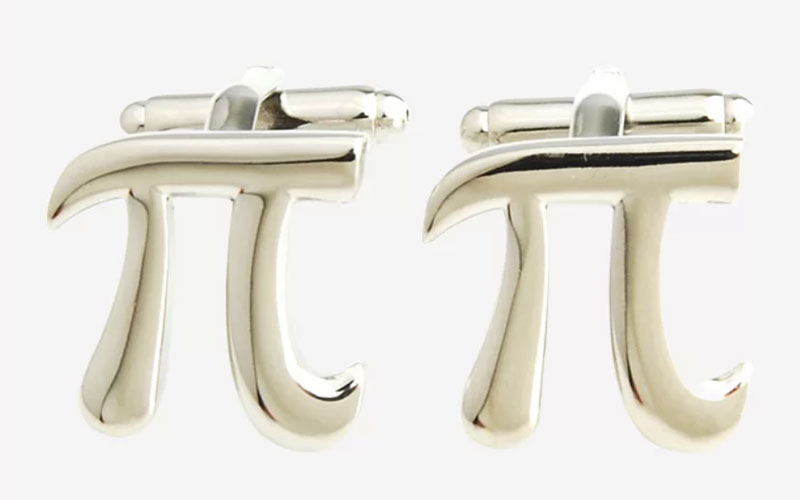
- Novelty shapes (logos, symbols, icons)
5.3 Surface and color customization
- Polished silver finish
- Matte black coating
- Dual-tone combinations
- Enamel color filling
5.4 Mixed-material designs
Modern cufflinks often combine materials such as:
- Resin inlays
- Carbon fiber accents
- Textured inserts
These combinations enhance visual appeal and market differentiation.
6. Pricing Structure and Cost Drivers
Understanding pricing helps buyers negotiate effectively and optimize sourcing decisions.
6.1 Key cost factors
- Material grade selection
- Design complexity
- Surface finishing requirements
- Order volume
- Packaging customization
- Tooling costs for new molds
6.2 Economies of scale
As order quantity increases:
- Unit price decreases
- Tooling cost is distributed
- Production efficiency improves
6.3 Hidden cost considerations
Buyers should also consider:
- Sampling fees
- Mold development charges
- Shipping insurance
- Packaging upgrades
A transparent supplier will clearly explain all cost components.
7. Packaging Solutions and Market Positioning
Packaging is no longer secondary—it is part of the product experience.
7.1 Standard packaging types
- Simple protective boxes
- Foam insert cases
- Basic retail packaging
7.2 Premium packaging
- Magnetic closure gift boxes
- Velvet-lined cases
- Corporate presentation boxes
7.3 Eco-conscious packaging trends
- Recyclable paper materials
- Minimal plastic usage
- Simplified structural design
7.4 Impact on sales
Strong packaging can:
- Increase perceived product value
- Improve retail shelf performance
- Enhance gifting appeal
- Reduce shipping damage
8. Quality Control Standards in Professional Manufacturing
Strict quality control is essential for wholesale reliability.
8.1 Incoming material inspection
- Chemical composition testing
- Surface purity checks
8.2 In-process inspection
- Shape consistency checks
- Surface defect detection
- Mechanical fitting tests
8.3 Final inspection
- Visual inspection under lighting
- Functionality testing of closures
- Random sampling verification
8.4 Packaging inspection
- Box integrity checks
- Label accuracy
- Damage prevention validation
9. Logistics and Supply Chain Management
Efficient logistics ensures stable business operations.
9.1 Lead time management
Reliable suppliers provide:
- Clear production timelines
- Buffer capacity for urgent orders
- Seasonal demand adjustment planning
9.2 Export packaging standards
- Shock-resistant packaging
- Moisture protection
- Compact stacking design
9.3 Documentation accuracy
Proper export operations require:
- Commercial invoices
- Packing lists
- Product specification sheets
10. Common Mistakes in Supplier Selection
Many buyers encounter problems due to avoidable mistakes.
10.1 Choosing based only on price
Low-cost suppliers may compromise:
- Material quality
- Finishing standards
- Mechanical durability
10.2 Ignoring sample testing
Samples must always be tested before bulk orders.
10.3 Overlooking production capacity
Small factories may struggle with:
- Large orders
- Tight deadlines
- Consistent output
10.4 Weak communication evaluation
Poor communication often leads to:
- Misunderstood specifications
- Delayed production
- Quality inconsistencies
11. Sample Evaluation Checklist
Before confirming a supplier, evaluate samples carefully.
11.1 Visual inspection
- Surface smoothness
- Color consistency
- Edge finishing
11.2 Structural testing
- Closure strength
- Movement flexibility
- Joint durability
11.3 Wear testing
- Scratch resistance
- Corrosion resistance
- Long-term appearance stability
11.4 Packaging evaluation
- Protection quality
- Presentation value
- Assembly consistency
12. Market Trends Influencing 2026 Demand
Several trends are shaping purchasing behavior.
12.1 Minimalist business accessories
Simple designs dominate corporate fashion.
12.2 Personalized gifting expansion
Customization is becoming standard rather than optional.
12.3 Mixed-material innovation
Designers increasingly combine metals with modern materials.
12.4 Neutral color dominance
Black, silver, and brushed finishes remain the most popular.
12.5 Functional aesthetics
Products must balance appearance with durability.
13. Building Long-Term Supplier Relationships
Long-term cooperation provides strategic advantages.
13.1 Pricing stability
Consistent partners often receive better pricing.
13.2 Priority production scheduling
Established clients receive faster turnaround times.
13.3 Design collaboration
Suppliers may provide:
- Design optimization advice
- Material improvement suggestions
- Cost-saving production adjustments
13.4 Reduced sourcing risk
Stable partnerships reduce uncertainty in supply chains.
14. Key Criteria for Selecting the Best Wholesale Suppliers for Stainless Steel Cufflinks 2026
A strong supplier should meet all of the following:
- Reliable and scalable manufacturing capacity
- Advanced customization capabilities
- Strict multi-stage quality control
- Transparent pricing structure
- Efficient logistics coordination
- Consistent sample-to-production accuracy
- Strong communication and technical support
Conclusion
The best wholesale suppliers for stainless steel cufflinks 2026 are those that combine technical manufacturing expertise, customization flexibility, stable production systems, and consistent quality control. Stainless steel cufflinks continue to hold strong market potential due to their durability, aesthetic versatility, and growing demand across corporate and fashion industries.
Successful sourcing is not determined by price alone, but by long-term reliability, production consistency, and the ability to adapt to evolving design trends. Buyers who prioritize these factors will be better positioned to build stable product lines and sustainable business growth in 2026 and beyond.